
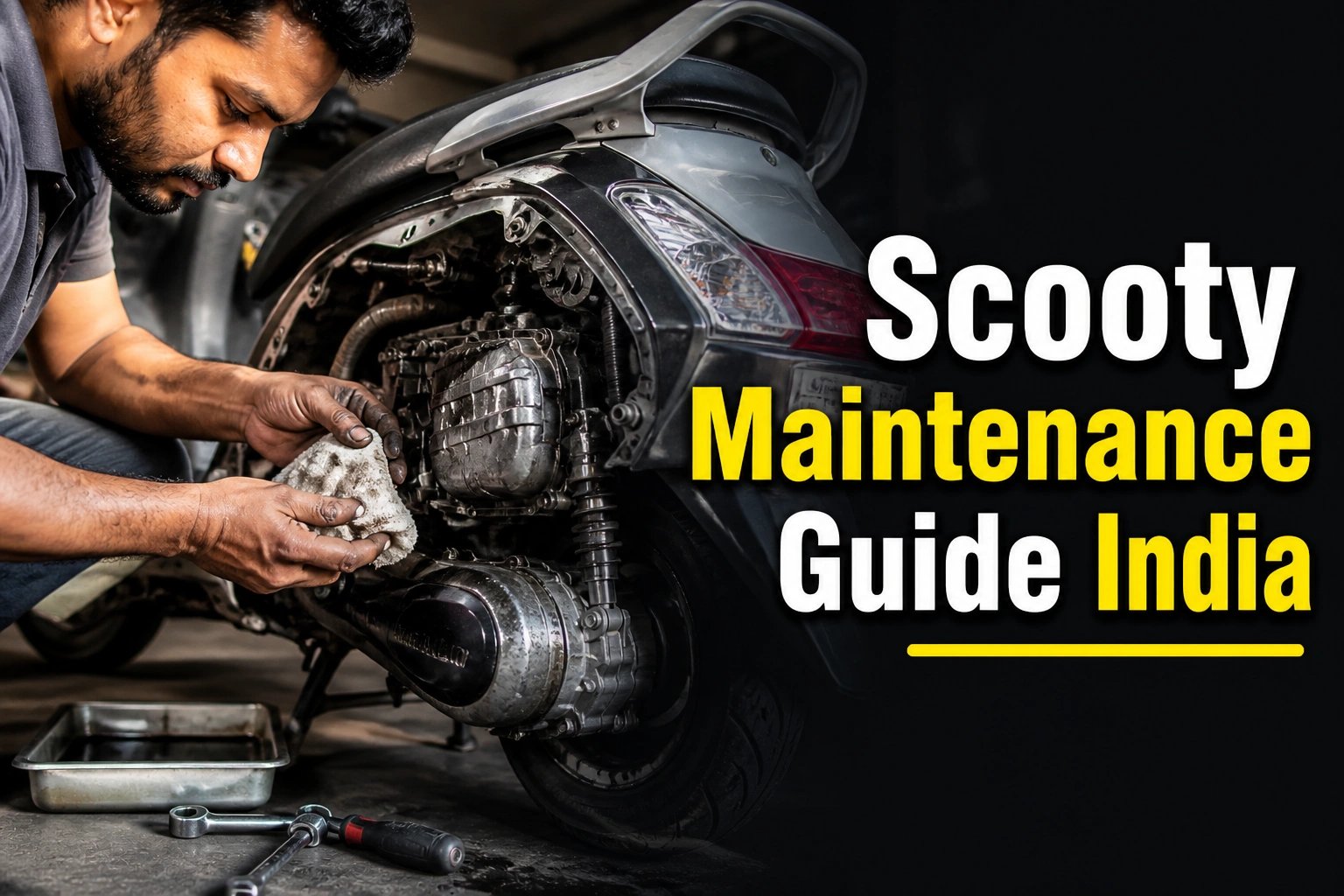
Proper scooty maintenance in India is the single most important thing you can do to keep your two-wheeler running for 10, 15, even 20 years. Indian roads, weather, and fuel conditions are unlike anywhere else in the world — and your scooty faces all of them every single day. Whether you own a Honda Activa, TVS Jupiter, Suzuki Access, or Yamaha Fascino, this guide will tell you exactly what to do, when to do it, and how much it costs.
Most scooty owners in India follow the same “plan”: fill petrol, ignore everything else, and panic when something breaks. That works — until it doesn’t. And when it fails, it fails expensively. A neglected scooty needs major engine work within 3–4 years. A well-maintained one? It’ll run reliably for 10–15 years without any serious repairs.
In this complete guide to scooty maintenance in India, I’ll walk you through every important aspect — from engine oil to tyres, brakes to battery, monsoon care to smart riding habits. Let’s get started.
Why Scooty Maintenance in India Is Different from Everywhere Else
When you read a maintenance guide written for European or American riders, a lot of it simply doesn’t apply to Indian conditions. Our roads are rough, potholed, and often waterlogged. Our summers regularly push temperatures past 40°C. Our monsoons are merciless. And petrol quality varies significantly from one pump to another.
All of these factors accelerate wear and tear on your scooty. Good scooty maintenance in India means adapting your servicing routine to these realities — not just following the manufacturer’s manual blindly. A European manual might say change oil every 5,000 km. In Indian conditions, 2,500–3,000 km is safer. This guide is written specifically for Indian riders and Indian conditions.
Also, according to the Ministry of Road Transport and Highways (MoRTH), two-wheelers account for over 70% of all registered vehicles in India. That means the roads, the service centers, and the spare parts ecosystem are all built around bikes and scooties. Taking advantage of this ecosystem with regular, informed maintenance is the smartest thing you can do as a scooty owner.
If you’re also looking for tips on the best scooties for women in India, check out our detailed comparison guide.
1. Engine Oil: The Foundation of Scooty Maintenance in India
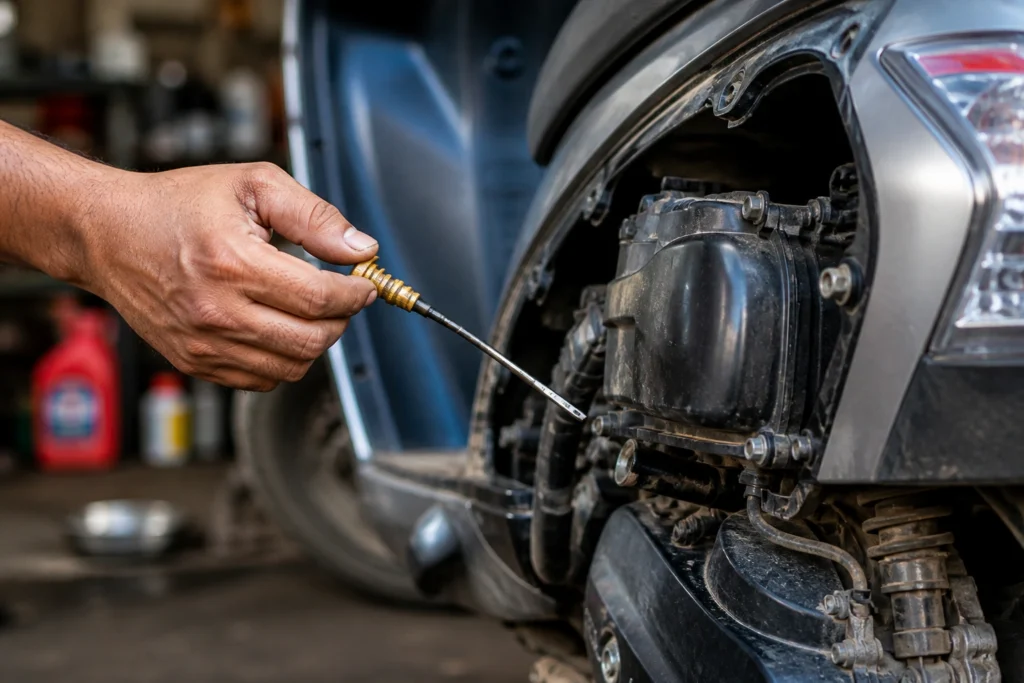
If there’s one rule of scooty maintenance in India that overrides everything else, it’s this: change your engine oil on time, every time. Engine oil lubricates all the moving metal parts inside your engine, reduces friction, carries away heat, and prevents corrosion. Without clean oil, your engine is slowly destroying itself.
For most Indian scooties, change the engine oil every 2,000–3,000 kilometres or every 3 months — whichever comes first. During peak Indian summers, oil degrades faster due to extreme heat, so err on the side of changing it earlier. Use the grade specified in your owner’s manual — most modern scooties recommend 10W-30 or 10W-40 semi-synthetic or fully synthetic oil.
A litre of quality engine oil costs ₹300–₹500. A seized engine costs ₹8,000–₹25,000 to repair. The math is simple. Check the oil level with the dipstick or sight glass every two weeks. Dark brown or black oil means it’s overdue for a change. Healthy oil looks golden or amber.
2. Tyre Pressure and Condition: Safety First
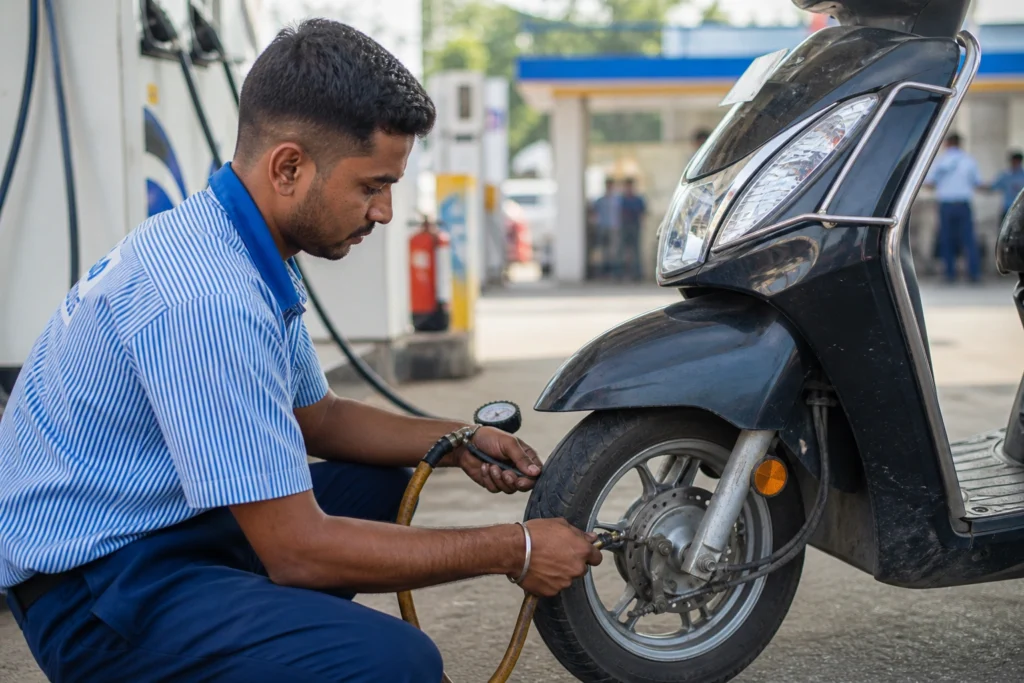
Tyre care is one of the most neglected parts of scooty maintenance in India — yet it directly affects your safety, fuel efficiency, and ride comfort. Most scooties need 28–32 PSI for the front tyre and 32–36 PSI for the rear. Check pressure weekly using a tyre gauge (costs under ₹200 at any auto parts shop).
Under-inflated tyres wear unevenly, reduce fuel mileage, and can blow out on hot Indian tarmac. Over-inflated tyres reduce grip — a serious danger on wet monsoon roads. Many petrol pumps across India offer free air filling, so there’s no excuse to skip this.
Inspect tyres every week for cracks, bulges, embedded nails, or worn-out tread. Indian roads regularly shed nails, glass shards, and debris that love to find your tyre. When tread grooves look shallow, replace the tyre immediately — don’t wait for a blowout at highway speed.
3. Air Filter: Especially Critical in India’s Dusty Conditions
India is a dusty country — construction dust, agricultural particulates, road grit, and city pollution are constant. All of it tries to enter your engine through the air filter. A clogged air filter starves your engine of air, causing poor combustion, bad mileage, loss of power, and eventually engine damage.
Clean the air filter every 4,000–6,000 kilometres. If you ride near construction sites, unpaved roads, or high-traffic highways, clean it more frequently. Most foam or paper filters can be cleaned by tapping out dust or blowing with compressed air. A replacement air filter costs ₹150–₹400 — get a new one every 12,000 km regardless.
This step is more important for scooty maintenance in India than for riders in less dusty countries. Don’t skip it.
4. Brake Maintenance: Never Compromise on This
Indian traffic is unpredictable. Auto-rickshaws that stop without warning, stray cattle, speed breakers around blind corners — your brakes need to be in perfect condition at all times. Brake maintenance is non-negotiable in any serious guide to scooty maintenance in India.
For drum brakes: check cable tension regularly and adjust if the lever feels loose or stiff. Have brake shoes inspected every 8,000–10,000 km and replaced when worn thin. For disc brakes: check brake fluid level monthly. If you hear a metallic scraping when braking, the pads need immediate replacement. Riding on worn pads can groove the disc itself — making repair much more expensive.
Test your brakes every morning by squeezing both levers before riding. They should feel firm, not spongy. A scooty that pulls to one side during braking has uneven brake adjustment and needs a mechanic’s attention immediately.
5. Battery Care for Indian Conditions
Scooty batteries in India have a hard life. Summer heat speeds up electrolyte evaporation. Short trips of 2–3 km (very common in Indian cities) don’t give the alternator enough time to fully recharge the battery. This cycle of partial discharge and insufficient recharge kills batteries fast.
For conventional wet-cell batteries: check the electrolyte level every 2–3 months and top up with distilled water (not tap water — minerals destroy battery cells). If your scooty is slow to start or the horn sounds weak, the battery is on its way out. Most scooty batteries last 2–3 years. Replace proactively — don’t wait to get stranded.
Keep terminals clean. White or blue-green corrosion on the terminals increases resistance and causes starting problems. Clean with a baking soda and water solution, rinse, dry, and apply petroleum jelly to prevent future corrosion. This tiny habit is easy but important for proper scooty maintenance in India.
6. Spark Plug: Small Part, Big Difference
The spark plug ignites your fuel-air mixture. A fouled or worn plug causes hard starting, rough idling, poor mileage, and even engine misfires. Inspect the spark plug every 6,000 km and replace it every 12,000–15,000 km. A quality spark plug costs just ₹80–₹200.
When you remove the old plug, read its colour: tan or light brown is healthy. Black and sooty means the fuel mixture is too rich. White or chalky means overheating. Both conditions indicate other issues that need investigating. Always buy the plug grade specified in your manual — NGK and Bosch OEM plugs are reliable, affordable choices widely available in India.
7. Coolant and Engine Temperature Management
Most budget scooties in India are air-cooled and rely on airflow across the engine fins to stay cool. Keep these fins clean and unobstructed. Avoid prolonged idling in heavy traffic on hot afternoons — if the engine feels excessively hot or power drops noticeably, pull over and let it cool for 10–15 minutes.
Premium liquid-cooled models like Honda Grazia, Aprilia SR 160, or Suzuki Burgman need coolant level checks monthly. Use only the manufacturer-recommended coolant — never substitute with plain water for long-term use. Inspect coolant hoses for cracks or swelling and replace them before they fail.
8. Carburetor or Fuel Injection System Maintenance
Older scooties use a carburetor; newer BS6 models use fuel injection (FI). Both need attention as part of thorough scooty maintenance in India. Indian petrol quality can vary between pumps, and impurities deposit inside fuel system components over time.
For carbureted scooties: have the carburetor cleaned and tuned every 10,000–12,000 km. Signs of a dirty carburetor include rough idling, difficult starting, or a sudden drop in mileage. For FI scooties: use a quality fuel injector cleaner additive every 6 months (₹200–₹400 from any auto parts shop). Always fill petrol from reputed branded pumps — HPCL, IOCL, BPCL, and Shell maintain more consistent fuel quality standards than local unbranded outlets.
9. Suspension: Taking On India’s Potholes
India’s roads are legendary for their potholes, speed breakers, and broken surfaces. Your scooty’s suspension absorbs hundreds of impacts daily. Worn suspension means a rough, uncomfortable ride, poor handling, damaged tyres, and bent wheel rims.
Check front fork seals for oil leaks (oily residue below the fork tubes = failed seal). Test rear shock absorbers by pushing down hard on the rear of the scooty and releasing — it should rebound once and stop. Multiple bounces mean the shocks are worn and need replacement. A rear shock replacement costs ₹800–₹2,500 — not expensive at all for the comfort and safety it provides.
10. Lights, Horn, and Electricals
All lights must work — headlight, taillight, brake light, and turn signals. Check them every week. It’s legally required, and it keeps you visible to other road users. A blown bulb replacement costs ₹50–₹150. For LED lights, watch for flickering — it indicates a loose connection or a failing regulator-rectifier unit.
And yes — keep your horn working. In Indian traffic, the horn is not optional. It’s safety equipment.
11. Seasonal Scooty Maintenance in India: Monsoon and Summer Prep
Seasonal care is one area where scooty maintenance in India truly differs from generic guides. Our seasons are extreme, and your scooty needs specific preparation for each.
Pre-Monsoon: Check all brakes thoroughly — wet brakes take longer to engage. Apply waterproof grease to all cables. Check tyre tread depth — bald tyres on wet roads are deadly. Inspect all electrical connectors and apply dielectric grease to prevent corrosion from moisture.
During Monsoon: After riding through waterlogged roads, brake gently a few times to dry out the brake pads. Wipe the scooty down after every wet ride. Never park in standing water — water entering the exhaust or air intake causes serious damage. Check for rust forming on exposed metal parts and treat early.
Summer (March–June): Change engine oil more frequently. Check tyre pressure carefully — heat expands air inside tyres, and over-pressurization on hot tarmac can cause blowouts. If your scooty has a coolant reservoir, check it monthly.
12. Complete Scooty Maintenance Schedule for Indian Riders
Here’s a simple, practical service schedule for scooty maintenance in India that you can follow regardless of brand or model:
Every 2,000–3,000 km (or 3 months): Engine oil change, air filter inspection, brake check, tyre pressure and condition, all lights and horn check.
Every 6,000 km: Spark plug inspection, brake pad/shoe measurement, lubrication of all cables and pivot points, battery terminal cleaning and check.
Every 12,000 km: Spark plug replacement, air filter replacement, carburetor cleaning or fuel injector service, full brake system check, suspension inspection.
Every 24,000 km: Full engine inspection, CVT belt check (replace if cracked or worn), thorough suspension rebuild if needed, comprehensive electrical system check.
Stick to an authorized service center during your warranty period. After warranty, a trusted local mechanic who knows your scooty brand can do equally good work at lower cost — just insist on genuine or OEM-quality spare parts. Cheap aftermarket parts save money today and cost you far more tomorrow.
13. Smart Riding Habits That Support Scooty Maintenance in India
Good scooty maintenance in India is not just about what you do at the service center. How you ride matters equally. These habits will add years to your scooty’s life:
Warm up the engine: Idle for 30–60 seconds before riding, especially in the morning. This lets oil circulate to all engine parts before you put it under load.
Don’t run on empty: The fuel pump uses petrol as a coolant. Constantly riding with the fuel light on stresses and eventually damages the pump. Refuel at one bar.
Don’t overload: Most scooties are rated for 150–160 kg total load including the rider. Overloading consistently strains the engine, suspension, and brakes.
Ride smoothly: Aggressive throttle and hard braking are hard on every component. Smooth acceleration and progressive braking extends the life of your engine, transmission, and brake system.
Avoid deep water: Cross waterlogged sections slowly. Water entering the air intake can cause hydro-lock — catastrophic engine damage that costs ₹10,000–₹30,000 to fix. No shortcut through a flooded road is worth that risk.
How Much Does Scooty Maintenance Cost in India?
One of the biggest reasons people skip scooty maintenance in India is the misconception that it’s expensive. It really isn’t. Here’s a realistic cost breakdown:
Routine service at an authorized center: ₹400–₹800 (excluding parts). Engine oil change including oil: ₹400–₹700. New tyre per piece: ₹800–₹1,500. New battery: ₹700–₹1,200. Spark plug: ₹100–₹300. Air filter: ₹150–₹400. Total annual maintenance budget for a well-maintained scooty: approximately ₹3,000–₹6,000 per year.
Now compare that to ₹15,000–₹30,000 for a major engine overhaul caused by skipping oil changes. Or ₹5,000–₹10,000 for a seized brake caliper from ignoring brake fluid. Regular scooty maintenance in India is not a cost — it’s an investment that pays back many times over.
Final Thoughts: Make Scooty Maintenance in India a Habit
The secret to a long-lasting scooty is surprisingly simple. Scooty maintenance in India doesn’t require mechanical expertise or expensive tools. It requires consistency. Change your oil on time. Check your tyre pressure weekly. Keep your brakes sharp. Visit the service center on schedule. Ride smoothly and sensibly.
India’s roads, heat, dust, and monsoons will test your scooty every single day. But a scooty that’s properly cared for will handle all of it with ease — for years on end. The riders who get 10–15 years out of their scooties aren’t lucky. They’re just consistent about these basics.
Start today. Pick one thing from this guide — even just checking your tyre pressure — and make it a habit. Your scooty will thank you, your wallet will thank you, and your daily commute will be smoother for it.
Found this guide helpful? Bookmark it for reference and share it with a fellow scooty owner. Got a question about your specific model? Drop it in the comments — happy to help!